“Patience and repetition can help you find clarity when life feels overwhelming.”
A Clearer Direction is a reminder that you can find clarity when life feels overwhelming, even if the way forward feels smaller than you expected.
The process may not feel dramatic, but it becomes real when you choose one clear action instead of waiting for a perfect mood, a perfect plan, or a perfect day.
When progress feels slow, remember that one missed step does not erase the path. What matters is your willingness to return with honesty and begin again from where you are.
Often the next right move is surprisingly simple: pause, breathe, tell yourself the truth, and do the next thing that is both wise and possible. Small movement creates room for larger change.
Let this encourage you today. You do not have to force the whole journey at once. If you stay close to the next faithful step, momentum will begin to gather in quiet and lasting ways.
Reflection: Where in your life do you most need to find clarity when life feels overwhelming, and what is one small step you can take today?
“You can rebuild momentum after losing motivation one faithful step at a time.”
A Quiet Return is a reminder that you can rebuild momentum after losing motivation, even if the way forward feels smaller than you expected.
The process may not feel dramatic, but it becomes real when you choose one clear action instead of waiting for a perfect mood, a perfect plan, or a perfect day.
When progress feels slow, remember that one missed step does not erase the path. What matters is your willingness to return with honesty and begin again from where you are.
Often the next right move is surprisingly simple: pause, breathe, tell yourself the truth, and do the next thing that is both wise and possible. Small movement creates room for larger change.
Let this encourage you today. You do not have to force the whole journey at once. If you stay close to the next faithful step, momentum will begin to gather in quiet and lasting ways.
Reflection: Where in your life do you most need to rebuild momentum after losing motivation, and what is one small step you can take today?
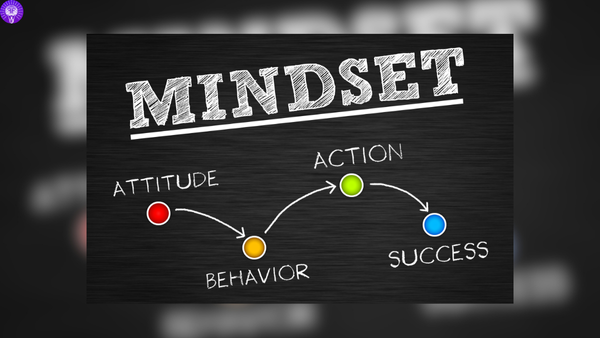
What is Mindset?
At its core, mindset is a set of deeply ingrained beliefs, attitudes, and assumptions that influence our thoughts, feelings, and behaviors. It’s the lens through which we view ourselves, others, and the world. This internal framework is largely unconscious, developed over years through our experiences, upbringing, cultural influences, and even genetic predispositions. It’s not a static entity; while foundational, it can evolve and be reshaped with conscious effort.
Think of it like an operating system for your brain. Just as a computer’s operating system dictates how it processes information and runs programs, your mindset dictates how your mind processes experiences and runs your life.
Key Components of Mindset
While mindset is a complex construct, we can break it down into several key components:
- Beliefs: These are the convictions we hold about ourselves, others, and the world. They can be empowering (“I am capable of learning new things”) or limiting (“I’m not good enough”). Our beliefs often operate beneath our conscious awareness but profoundly influence our actions.
- Attitudes: Attitudes are our predispositions to respond in a certain way to people, objects, or situations. They reflect our general outlook, such as optimism or pessimism, and can significantly impact our emotional state and approach to challenges.
- Assumptions: These are ideas or theories that we take for granted as true, often without conscious thought. For example, assuming that failure is a sign of weakness or that success comes only through extraordinary talent.
- Values: Our core values represent what we deem important in life (e.g., honesty, compassion, achievement). While not directly a “component” of mindset in the same way beliefs are, our values often underpin and reinforce certain mindsets.
- Self-Talk: The internal dialogue we engage in constantly. This “inner voice” can be encouraging and supportive or critical and self-defeating, directly reflecting and reinforcing our underlying mindset.
- Attributional Style: This refers to how we explain the causes of events, particularly successes and failures. Do we attribute success to our effort (internal, controllable) or to luck (external, uncontrollable)? Do we view setbacks as temporary (unstable) or permanent (stable)?
How Mindset Affects Your Life
The influence of mindset permeates every facet of our existence:
- Performance and Achievement: A growth mindset, for example, where individuals believe their abilities can be developed through dedication and hard work, is strongly linked to higher achievement in academics, sports, and professional careers. Conversely, a fixed mindset, where abilities are seen as innate and unchangeable, can lead to avoidance of challenges and giving up easily.
- Resilience and Well-being: A resilient mindset allows us to bounce back from adversity, viewing challenges as opportunities for growth rather than insurmountable obstacles. It fosters optimism, reduces stress, and promotes overall mental and emotional well-being.
- Relationships: Our mindset about others influences how we interact with them. A collaborative and empathetic mindset can foster stronger, more fulfilling relationships, while a suspicious or judgmental mindset can lead to conflict and isolation.
- Physical Health: Believe it or not, mindset can even impact our physical health. Chronic stress fueled by a pessimistic mindset can weaken the immune system, while an optimistic and proactive mindset can encourage healthier lifestyle choices.
- Decision-Making: Our underlying beliefs and assumptions unconsciously guide our choices. A scarcity mindset, for instance, might lead to risk-averse decisions, while an abundance mindset might encourage exploring new opportunities.
- Learning and Personal Growth: A curious and open mindset is fundamental for lifelong learning. It allows us to embrace new information, challenge our existing views, and continuously evolve as individuals.
Why Mindset is Important
The importance of mindset cannot be overstated. It’s not just a feel-good concept; it’s a powerful psychological mechanism that dictates our potential and quality of life.
- It Shapes Our Reality: We don’t just react to events; we interpret them through the filter of our mindset. This means two people can experience the exact same event but have vastly different perceptions and emotional responses based on their individual mindsets.
- It Determines Our Potential: Our mindset sets the boundaries of what we believe is possible for ourselves. If we believe we are limited, we will often act in ways that reinforce those limitations. If we believe we can grow and develop, we unlock immense potential.
- It Empowers Us: Understanding mindset gives us agency. While we may not always control external circumstances, we can learn to control our internal responses and interpretations. This is a profound source of personal power.
- It Drives Behavior: Ultimately, our mindset is the precursor to our actions. Our beliefs dictate our feelings, which in turn drive our behaviors. By shifting our mindset, we can fundamentally change how we act in the world.
- It Fosters Resilience: In a world filled with uncertainties, a strong and adaptive mindset is an invaluable asset. It allows us to navigate setbacks, learn from failures, and emerge stronger and more capable.
In conclusion, mindset is far more than a buzzword; it’s a fundamental aspect of human psychology that profoundly impacts every aspect of our lives. By recognizing its power, understanding its components, and consciously working to cultivate a more empowering mindset, we can unlock our true potential, foster greater well-being, and ultimately, shape a more fulfilling life.

If you want to truly succeed, to build a life of impact, joy, and fulfillment, it all starts not with what you do, but with who you decide to be. It’s about cultivating an inner world that can weather any storm and seize every opportunity. So, what mindset do you really need?
As the brilliant Dr. Carol Dweck teaches us, the fundamental shift begins with a growth mindset. This isn’t just a catchy phrase; it’s the profound belief that your abilities, intelligence, and even your character can be developed through dedication and hard work.
- Forget “I can’t”: There’s no such thing as “I’m not good at this” or “I was born this way.” Instead, adopt the mantra, “I can’t do this yet.” This tiny word “yet” holds immense power.
- See challenges as opportunities: When you face a setback, a “failure,” don’t see it as a reflection of your inherent limits. See it as feedback, a chance to learn, adapt, and grow stronger. This is how champions are forged.
- Love the process: Success isn’t just about the destination; it’s about falling in love with the journey of becoming. Every effort, every struggle, every small win is a part of your evolution.
Tony Robbins often says, “It’s not about the resources, it’s about the resourcefulness.” This is a game-changer. When you hit a wall, do you crumble, or do you start looking for a ladder, a pickaxe, or even a tunnel?
- Ask empowering questions: Instead of “Why is this happening to me?” ask, “What can I learn from this? How can I solve this? Who can help me?”
- Innovate and adapt: The world is constantly changing. Success demands that you be agile, willing to pivot, and always looking for creative solutions. Don’t be afraid to experiment and break traditional molds.
- Leverage your network: No one succeeds alone. Surround yourself with people who lift you up, challenge you, and offer different perspectives. Your network is a powerful resource you might not even realize you have.
Mel Robbins will tell you to stop waiting for permission, stop blaming circumstances, and take radical responsibility for your life. Your results, your happiness, your progress – it all stems from your choices and actions.
- Eliminate blame: Blaming others, the economy, or your past only disempowers you. When you take ownership, you reclaim your power to change things.
- Focus on what you can control: You can’t control everything, but you can control your effort, your attitude, and your response to challenges. Pour your energy into these levers.
- The 5-second rule: Don’t overthink it. When you have an impulse to act on a goal, to make a positive change, count down 5-4-3-2-1 and move. This breaks the habit of hesitation and procrastination.
As Marie Forleo consistently reminds us, “Everything is figureoutable.” This isn’t just optimism; it’s a deep-seated belief in abundance.
- Shift from scarcity to plenty: The scarcity mindset tells you there’s not enough – not enough time, money, opportunities. The abundance mindset recognizes that the world is full of possibilities, and there’s enough for everyone.
- Celebrate others’ success: Instead of feeling threatened, feel inspired. When others succeed, it shows you what’s possible and expands your own vision for what you can achieve.
- Be a giver: The more you give – your time, your knowledge, your support – the more you open yourself up to receiving. Abundance flows both ways.
Success isn’t about magic formulas or perfect circumstances. It’s about consciously choosing and consistently nurturing these powerful mindsets: Growth, Resourcefulness, Responsibility, Abundance, and Self-Belief.
Grab your copy of The Let Them Theory today at https://amzn.to/4bPgSDj
Mel Robbins, a New York Times bestselling author and a leading voice in the realm of motivation and mindset, offers a refreshing perspective with her book, “The Let Them Theory” . Known for her practical, no-nonsense approach and the global impact of her work, including a top-ranked podcast, Robbins has established herself as a trusted guide for individuals seeking personal growth . Her ability to distill complex ideas into simple, actionable steps has resonated with millions worldwide. This book tackles a fundamental human struggle: the tendency to become entangled in the opinions, drama, and judgments of others, which often leads to significant stress and a feeling of being overwhelmed . It’s a near-universal experience to find oneself expending valuable energy trying to manage the thoughts, feelings, and behaviors of those around us. Recognizing this common pain point is the first step towards embracing the liberating message of “The Let Them Theory.”
This book presents a straightforward yet profound solution to this pervasive issue through the simple phrase “Let Them” . Robbins positions this theory not merely as a suggestion, but as a step-by-step guide designed to free individuals from the exhausting and often futile endeavor of trying to control everything and everyone in their orbit . By embracing this principle, readers are encouraged to shift their focus inward, prioritizing their own dreams, goals, and overall happiness . The simplicity of the core concept, encapsulated in two powerful words, makes it easily accessible and potentially transformative for anyone seeking to reclaim their personal power and cultivate a greater sense of well-being.
The Core of the Theory: “Let Them” Explained
At the heart of “The Let Them Theory” lies the powerful notion that consciously choosing to “Let Them” – allowing others to be themselves, think their own thoughts, and make their own choices – can unlock a profound sense of freedom . This central argument challenges the deeply ingrained human inclination to try and exert control over aspects of life that are fundamentally uncontrollable . The book suggests a significant shift in perspective, encouraging readers to recognize the limits of their influence over others and to liberate themselves from the stress that inevitably arises from attempting to manage the unmanageable. This concept requires a conscious effort to step back and resist the urge to intervene or manipulate external circumstances.
A key element of the theory is the emphasis on redirecting energy from the external to the internal . Rather than focusing on altering the thoughts and actions of others, Robbins guides readers to concentrate on what truly lies within their domain: their own thoughts, actions, and emotional responses. This shift aligns with principles of personal responsibility and empowers individuals to take ownership of their own experiences. By focusing inward, individuals can cultivate a greater sense of self-efficacy and reduce their reliance on external validation or conformity.
Furthermore, Robbins introduces a crucial companion to the “Let Them” principle: “Let Me” . This second part of the theory underscores the importance of taking responsibility for one’s own reactions and the choices made in response to external situations. It clarifies that “Let Them” is not about passive acceptance or apathy, but rather an active decision to disengage from the struggle for external control and to proactively manage one’s own internal landscape . This emphasis on personal agency ensures that the theory is understood as a pathway to empowerment, not a surrender of personal responsibility. To further illustrate these principles, Robbins incorporates relatable anecdotes from her own life, demonstrating how she has practically applied the “Let Them” approach to navigate various challenges . These personal examples serve to make the theory more tangible and believable, fostering a stronger connection with the reader and showcasing its real-world applicability.
Key Concepts and Techniques from “The Let Them Theory”
“The Let Them Theory” is not merely a philosophical concept; it is grounded in both ancient wisdom and contemporary science . Robbins draws connections between her theory and established principles from Stoicism, which emphasizes focusing on what one can control, and Buddhism, with its concept of detachment . She also incorporates ideas from detachment theory and radical acceptance, alongside insights from neuroscience, to provide a robust foundation for her approach . This integration of diverse perspectives lends credibility to the “Let Them” principle, suggesting that it resonates with enduring truths about human nature and well-being.
A practical technique emphasized in the book is the importance of recognizing personal stress triggers . Robbins guides readers to become more aware of the moments when they feel the urge to control others and the accompanying stress response. The phrase “Let Them” is presented as a powerful mental cue to interrupt this cycle, allowing individuals to consciously choose a different way of responding . This immediate application of the theory as a tool for stress reduction makes it a highly practical resource for managing daily anxieties.
To further aid in navigating stressful situations, the book introduces the “ABC Loop” . This structured approach involves Assessing what aspects of a situation are within one’s control and what are not, Breaking the cycle of stress by consciously saying “Let Them” and taking a moment to breathe, and Choosing a more productive and empowered response. This step-by-step framework provides a clear and actionable method for applying the core principles of the theory in challenging circumstances.
Another key concept explored in the book is the importance of understanding different perspectives . Robbins highlights that everyone’s behavior, even when perplexing or frustrating, makes sense to them based on their unique life experiences, fears, and hopes. Cultivating this understanding fosters greater acceptance of others without the need for them to change . This promotes empathy and reduces the tendency to judge, leading to more harmonious interactions and a diminished sense of personal frustration. Furthermore, the book demonstrates the broad applicability of the “Let Them Theory” by exploring its relevance in eight key areas of life, including professional settings, personal relationships, and the pursuit of individual goals . This comprehensive approach underscores the potential for the theory to positively impact various facets of one’s existence.
Actionable Insights for Personal Growth
One of the primary actionable insights offered by “The Let Them Theory” is the imperative to stop expending valuable energy on aspects of life and the behaviors of individuals that lie beyond one’s control . By consciously choosing to disengage from these futile attempts at manipulation, individuals can free up significant mental and emotional resources that can be redirected towards personal growth and well-being . This shift in focus can lead to increased productivity, reduced feelings of overwhelm, and a greater sense of personal agency.
The book strongly emphasizes the importance of prioritizing self-care and overall well-being . By releasing the need to control others, individuals gain the capacity to channel their energy towards their own health, happiness, and the pursuit of their personal goals. This aligns with the growing recognition of the vital role that self-care plays in maintaining mental and emotional resilience in today’s demanding world.
“The Let Them Theory” also offers valuable guidance on improving relationships . By fostering an attitude of acceptance and reducing the tendency to impose unrealistic expectations, individuals can cultivate healthier and more authentic connections with others . This involves recognizing that people will evolve and change, and that attempting to force them to remain static can lead to conflict and resentment.
Setting healthy boundaries is another crucial actionable insight derived from the book . Robbins provides strategies for learning how to establish clear boundaries and to confidently say no to demands that drain one’s time and energy, without feeling guilt or obligation. This empowerment to protect one’s personal resources is essential for maintaining a sense of balance and control in life.
The book also encourages readers to embrace imperfection and to accept that they cannot dictate how others perceive them . Releasing the need to be constantly understood or approved of by everyone can be incredibly liberating, reducing anxiety and fostering a greater sense of self-acceptance. Finally, “The Let Them Theory” underscores the importance of practicing self-compassion . Robbins encourages readers to become their own biggest supporters and to treat themselves with kindness and understanding, particularly when facing criticism or setbacks. This focus on self-compassion is vital for building resilience and maintaining a positive self-image.
Concise Summary: Key Principles in Bullet Points
Here are the core principles of “The Let Them Theory” in a concise bulleted list:
- Focus on what you can control: Your thoughts, actions, and feelings.
- Let go of the need to manage or change others.
- Say “Let Them” to release stress and frustration caused by external factors.
- Follow “Let Them” with “Let Me” to take responsibility for your responses.
- Accept people for who they are, without trying to fix them.
- Stop wasting energy on things you can’t influence.
- Set healthy boundaries to protect your time and energy.
- Prioritize your own happiness, goals, and well-being.
- Recognize that others’ opinions of you are not your business.
- Embrace the freedom of being misunderstood.
A Balanced Perspective: Addressing Potential Criticisms
While “The Let Them Theory” offers a compelling approach to personal growth, it’s important to acknowledge potential areas of misinterpretation . Some individuals might perceive the theory as advocating for apathy or a complete disengagement from the lives and concerns of others. It is crucial to understand that the theory does not promote indifference but rather encourages a shift in focus towards what is genuinely within one’s power to influence.
Furthermore, the “Let Them” principle should not be confused with a lack of personal accountability or a dismissal of goals . The book emphasizes releasing unnecessary negativity and the urge to control external factors, not abandoning one’s responsibilities or aspirations. It’s about directing one’s efforts towards personal growth and actions, rather than being consumed by the uncontrollable actions of others.
Concerns have also been raised in some discussions about whether the theory might inadvertently lead to a sense of disconnect in relationships . While the primary aim is to foster healthier boundaries and reduce stress, it’s important to apply the “Let Them” principle with discernment, ensuring it does not hinder genuine connection and support within meaningful relationships. The emphasis should be on releasing the need to control others, not on withdrawing from meaningful engagement.
Embracing a Life of Less Control and More Peace
Adopting the mindset of “The Let Them Theory” offers a pathway to a more peaceful and empowered life . By consciously choosing to relinquish the need to control the thoughts, feelings, and actions of others, individuals can experience a significant reduction in stress and a greater sense of inner calm. The theory fosters healthier and more authentic relationships, built on acceptance rather than the desire for manipulation. Ultimately, “The Let Them Theory” empowers individuals to reclaim their personal power by focusing on what truly matters – their own well-being, choices, and journey towards a more fulfilling existence . It serves as a simple yet profound tool for navigating the complexities of life with greater serenity and self-assurance.
Start Your Journey to Letting Go
To fully grasp the transformative potential of “The Let Them Theory” and to gain practical guidance on integrating its principles into your daily life, it is highly recommended that you purchase and read the complete book . “The Let Them Theory” is readily available at major retailers such as Amazon, where you can find both print and Kindle versions . For those who prefer audiobooks, the book is also available on Audible, narrated by Mel Robbins herself . You can also find it at Barnes & Noble and other reputable booksellers . For additional insights and bonus content related to the “Let Them Theory,” be sure to explore Mel Robbins’ active presence on social media platforms like Instagram, YouTube, and TikTok, as well as her globally popular podcast . Embark on your journey to letting go and discover the freedom that awaits.
Purchase The Let Them Theory on Amazon by clicking the link below
https://amzn.to/4bPgSDj