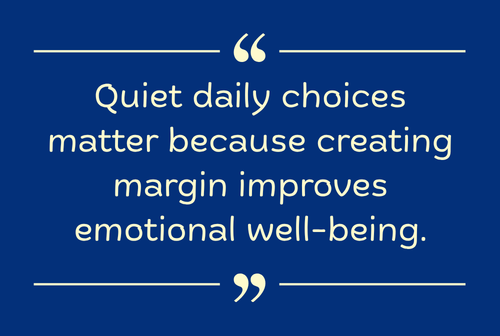
“Quiet daily choices matter because creating margin improves emotional well-being.”
It is easy to overlook what is small because it does not announce itself. Yet repeated thoughts, repeated choices, and repeated actions shape the tone of a life more than occasional bursts of intensity.
Moreover, carving out time to engage with loved ones—whether through a quick chat, a phone call, or shared activities—can foster deeper connections and provide emotional support. For example, taking a few minutes in the evening to discuss your day with a partner or friend can strengthen your relationship and contribute to your emotional well-being. It’s these moments of connection that create a fabric of support, reminding us we are not alone in our struggles.
In our fast-paced world, the small decisions we make daily often get overshadowed by the allure of significant life changes or achievements. However, it’s crucial to understand that these choices—whether they’re as simple as what we eat for breakfast or how we prioritize our time—can significantly affect our mental and emotional health.
When the day feels discouraging, the temptation is to believe that only dramatic change counts. It does not. The steady things still matter, especially when they seem ordinary.
Consider journaling as another tool for enhancing emotional well-being. Writing down your thoughts and feelings can serve as a form of therapy, allowing you to process experiences and emotions in a safe space. Documenting your daily choices and how they affect your mood can help you identify patterns and make more intentional decisions moving forward.
It is essential to recognize that even the smallest shifts in our daily routines can lead to monumental changes in our lives. For instance, if you begin each morning with a few minutes of stretching or yoga, you may find that not only does your physical body benefit, but your mental clarity and emotional state improve as well. The act of dedicating time to yourself each day can be a powerful ritual that promotes self-care and mindfulness.
This is why gentle consistency carries so much strength. It keeps you connected to what is true, helps you return after setbacks, and gives your life a rhythm that can hold real growth.
When setbacks occur, which they inevitably will, having a strong support system becomes even more critical. This network can remind you of the positive progress you’ve made and help you to recalibrate your intentions, keeping you connected to your goals. The gentle persistence of making even minor adjustments in these connections can help maintain the momentum needed to achieve your larger aspirations.
Additionally, the importance of creating a supportive environment cannot be overstated. Surrounding yourself with positive influences, whether it’s friends, family, or even uplifting media, can reinforce the positive choices you make. For instance, joining a community group that shares similar interests can provide motivation to stick to your goals, whether they involve fitness, hobbies, or personal development.
I wrote Morning Routines to help you establish better habits so you can win the morning and win the day. Grab your copy today at https://amzn.to/3RkfzG9
Carry that with you today. Honor the simple thing that matters, stay with it a little longer, and trust that quiet faithfulness is doing more than you can see.
Take a moment today to cherish those quiet choices. Perhaps you can choose to take a moment of stillness or indulge in something that makes you happy, like listening to your favorite music or enjoying a warm cup of tea. Each choice serves as a reminder that our daily experiences can be enriched through intention and mindfulness.
As you navigate through your day, let the power of your choices guide you towards creating a life filled with purpose and joy.
Moreover, reflect on how these choices not only enhance your life but also the lives of those around you. When you prioritize your well-being, it sets a positive example for others, encouraging them to make choices that promote their own emotional health. This ripple effect can foster a community of support, where individuals uplift one another through their daily actions and decisions.
Reflection: Where are you being invited to remember that creating margin improves emotional well-being, and how could that change the way you move through today? Think about how each choice you make, no matter how small, contributes to your emotional landscape and overall well-being. Embrace the power of choices in your daily life.
Most people think weight loss is a simple equation of willpower and math, but the arrival of GLP-1 therapy has finally exposed the complex, hormonal truth behind why our bodies hold onto weight. If you have been following the news, you’ve heard the names—Ozempic, Wegovy, Mounjaro—and seen the dramatic transformations, but understanding the “why” behind the needle is essential before making it part of your journey. This isn’t just about a smaller waistline; it is about a fundamental shift in metabolic science that is currently redefining chronic disease management for millions of people worldwide.
The Biological Blueprint of GLP-1
To understand the medication, you must first understand the messenger. Glucagon-like peptide-1 (GLP-1) is a naturally occurring hormone produced in the small intestine. Its job is simple yet vital: it tells your body that food has arrived. In a perfectly balanced system, GLP-1 signals the pancreas to release insulin, tells the liver to stop producing extra glucose, and signals the brain that you are full.
However, for many individuals struggling with obesity or Type 2 diabetes, this hormonal signaling is often muffled or broken. The synthetic GLP-1 receptor agonists we see today are engineered versions of this hormone that stay in the system much longer than our natural versions. While your body’s natural GLP-1 disappears in minutes, these medications work for days, providing a constant, steady hand on the steering wheel of your metabolism.
The Purpose Beyond the Scale
While the media focus is largely on aesthetics, the medical purpose of GLP-1 therapy is rooted in health optimization. Originally, these drugs were the frontline defense for Type 2 diabetics, helping to stabilize blood sugar and prevent the devastating long-term effects of the disease, such as nerve damage or vision loss. As researchers tracked the results, they realized the secondary “side effect” of significant weight loss was actually a primary solution for the obesity epidemic.
Using GLP-1 is about more than shedding pounds; it’s about reducing systemic inflammation, lowering the strain on the heart, and reversing fatty liver disease. By quieting “food noise”—that constant, intrusive urge to eat even when you aren’t hungry—these medications allow individuals to make intentional choices about their nutrition for the first time in their lives.
Navigating the Warnings and Restrictions
Despite the success stories, GLP-1 agonists are powerful medical interventions that come with a strict set of boundaries. They are not intended for people looking to lose “the last five pounds” for a vacation. Most clinical guidelines restrict their use to those with a Body Mass Index (BMI) of 30 or higher, or a BMI of 27 with at least one weight-related condition like high blood pressure or sleep apnea.
The most common hurdles are gastrointestinal. Because the medication slows gastric emptying—meaning food stays in your stomach longer—many patients experience nausea, reflux, or more severe digestive issues as their bodies adjust. Furthermore, there are serious, albeit rare, contraindications. Those with a history of medullary thyroid cancer or certain endocrine disorders are strictly barred from use. There is also the emerging concern of “lean mass loss.” When the body loses weight rapidly, it doesn’t just burn fat; it can burn muscle. This makes strength training and high-protein intake a mandatory part of the protocol, rather than an optional suggestion.
Strategic Recommendations for Success
If you and your healthcare provider decide that GLP-1 is the right path, the goal should be “metabolic rehabilitation.” This means using the medication as a tool to build a lifestyle that can eventually sustain itself.
The Protein Priority: Because appetite is suppressed, every bite must count. Prioritize lean proteins to protect your muscle tissue and metabolic rate.
Hydration and Electrolytes: Slowed digestion can affect how your body processes fluids. Constant hydration is necessary to avoid the fatigue and headaches often associated with these treatments.
Micro-Nutrient Density: Since you are eating less volume, the quality of your food must be higher to avoid nutrient deficiencies.
The Path of Alternatives
GLP-1 therapy is a lifelong commitment for many, and it isn’t the only way to achieve metabolic health. For those who cannot tolerate the medication or prefer a different route, several evergreen alternatives remain highly effective.
Protein-Leveraging and Fiber: Eating high-protein, high-fiber meals naturally stimulates your body’s own GLP-1 production. Foods like lentils, beans, and lean meats provide a similar (though less intense) satiety signal.
Time-Restricted Feeding: Narrowing your eating window can help improve insulin sensitivity and give the digestive system time to reset, mimicking some of the metabolic benefits of the medication.
Resistance Training: Muscle is the most metabolically active tissue in the body. By building more muscle, you increase your basal metabolic rate, making weight management significantly easier over the long term.
True health is found in the intersection of modern science and daily intentionality. Whether you choose the path of medication or the path of lifestyle intervention, the goal remains the same: a body that functions with efficiency and a mind that is at peace with its choices. The GLP-1 era has opened a door to a new understanding of our bodies, but it is the habits we build while that door is open that will determine our ultimate success.
We’ve spent the last few years obsessed with individual optimization. We track our sleep stages, weigh our protein, and time our cold plunges with surgical precision. But in this hyper-fixation on the self, we’ve overlooked a biological necessity that is just as vital as clean water or oxygen: each other.
Recent data is making it clear that isolation isn’t just a bummer; it’s a physiological stressor. When we lack consistent, meaningful interaction, our bodies interpret that silence as a threat. Cortisol spikes, inflammation markers rise, and our cellular aging accelerates. Longevity isn’t just a solo sport; it’s a team event.
The biology of belonging
Your nervous system is designed to co-regulate. This means that when you are in the presence of people you trust, your heart rate variability improves and your brain produces oxytocin—a hormone that actively repairs heart tissue and lowers blood pressure.
Think of social fitness as a workout for your emotional resilience. Just as lifting weights creates micro-tears that lead to stronger muscle, navigating the nuances of human relationships keeps your cognitive functions sharp and your stress response flexible. Without this “social load,” our mental and physical systems begin to atrophy.
Building a social fitness routine
Treating social health as a “routine” might sound clinical, but in an age of digital isolation, it’s the only way to ensure it happens. This isn’t about having a thousand followers; it’s about having three people you can call when things fall apart.
To start, look for “third spaces”—environments that aren’t your home or your office where you can exist without the pressure of productivity. Whether it’s a local run club, a community garden, or a regular coffee shop meetup, the goal is repeated, unplanned interaction. This consistency builds the “weak ties” that researchers say are essential for a sense of belonging and long-term brain health.
Co-regulation as a performance hack
If you want to perform better in your career or your fitness, stop trying to do it in a vacuum. High-level performers are shifting away from the “lone wolf” mentality because it’s biologically inefficient. When you work or train alongside others, your brain enters a state of flow more easily.
This is the hidden secret of the world’s longest-living populations. They don’t just eat well; they eat together. They don’t just move; they move with a purpose that involves their neighbors. By integrating others into your wellness goals, you turn a chore into a lifestyle.
The most sophisticated biohack available right now doesn’t come in a bottle and it doesn’t require a subscription. It’s the simple, radical act of showing up for someone else and letting them show up for you. As we look at the future of wellness, the focus is shifting from “What am I eating?” to “Who am I eating with?” Prioritizing your social fitness might be the one thing that adds more years to your life—and more life to your years—than any other habit in your toolkit.
Forget the 4:00 AM wake-up calls and the “rise and grind” mantras that dominated the last decade. In our current landscape, the most valuable asset you own isn’t your stock portfolio or your side hustle—it’s your nervous system. We’ve reached a tipping point where traditional productivity hacks are failing because they ignore the biological reality of how we’re built to function. Real high-performance is no longer about doing more; it’s about regulating better.
The biology of the burn
Most of us are living in a state of “functional freeze” or chronic “fight-or-flight.” When your sympathetic nervous system is constantly dialed to ten, your brain literally deactivates the centers responsible for creative problem-solving and long-term planning. You aren’t lazy; you’re physiologically overstimulated. To reclaim your edge, you have to stop treating your body like a machine and start treating your nervous system like the delicate, powerful command center it is.
Vagus nerve stimulation: The ultimate shortcut
The vagus nerve is the “reset button” of the body. Running from the brainstem to the abdomen, it’s the primary driver of your parasympathetic—or “rest and digest”—state. While many articles treat this like a niche medical topic, it is actually a foundational wealth-building tool. A regulated vagus nerve leads to lower cortisol, better sleep, and the emotional resilience required to make high-stakes decisions. Simple shifts, like extended exhales or cold exposure, aren’t just wellness trends; they are manual overrides for stress.
Circadian rhythm productivity
We’ve tried to fight the sun for too long. Emerging research shows that aligning your hardest work with your natural cortisol peaks—and viewing early morning sunlight—stabilizes your mood more effectively than any supplement. By respecting your circadian rhythm, you stop fighting against your own hormones. This is the difference between forced discipline and effortless flow. When your biology is optimized, you don’t have to “try” to be productive; you simply are.
The wealth of wellness
We are seeing a massive shift in how the world’s most successful people view their time. The new status symbol isn’t being “busy”; it’s being “regulated.” Protecting your peace is now a strategic business move. When you prioritize nervous system health, you’re investing in your longevity and your ability to stay in the game for the next thirty years, rather than burning out in the next three. This is the ultimate competitive advantage in an increasingly chaotic world.
True success in today’s environment requires a radical departure from the “more is more” mindset. By focusing on somatic regulation and biological alignment, you create a foundation that supports both your health and your ambitions. The future belongs to those who have the internal calm to navigate the external noise. Start listening to your biology, and the results you’ve been chasing will finally have the space to manifest.
Music has been a cornerstone of human culture for thousands of years, serving as a means of expression, communication, and healing.
Recent research has revealed that certain frequencies in music can have a significant impact on our mood and even possess healing properties.
Let’s explore the science behind these frequencies and their effects on our well-being.
Understanding Sound Frequencies
Sound is essentially vibrations that travel through the air, and these vibrations have a distinct frequency. Frequency refers to the number of cycles or vibrations per unit of time and is measured in Hertz (Hz). Different musical notes are produced by sound waves vibrating at specific frequencies.
The Impact of Frequencies on Mood
Our brain is akin to a symphony conductor, orchestrating various responses to the sounds we hear. When we listen to music, our brain processes the different frequencies present in the melodies and rhythms. Research has shown that specific frequencies can directly impact our brainwaves. For example, higher frequencies, like those found in upbeat tunes, can stimulate the brain, triggering the release of neurotransmitters like dopamine, which are associated with feelings of joy and pleasure. Conversely, lower frequencies, such as the soothing hum of a cello, can induce a state of relaxation by encouraging the brain to produce alpha and theta brainwaves, which are linked to calmness and meditation.
Healing Frequencies and Their Effects
The concept of healing frequencies is based on the idea that all matter, including the human body, vibrates at specific frequencies. Within the realm of sound therapy and alternative health, the Solfeggio frequencies are believed to have profound physiological and psychological effects. Each of these frequencies is associated with specific properties and is thought to be able to impact the body and mind in various beneficial ways. Here are some of the key Solfeggio frequencies and their effects:
396 Hz – Liberating Frequency | Root Chakra: This frequency is associated with the Root Chakra, aiming to liberate and release negative energy. It promotes a sense of grounding, security, and stability.
417 Hz – Resonating Frequency | Sacral Chakra: Aligned with the Sacral Chakra, 417 Hz is believed to resonate with emotions, creativity, and passion. It helps in breaking negative patterns and facilitating positive change.
528 Hz – Love Frequency | Solar Plexus Chakra: Known as the Love Frequency, 528 Hz is linked to the Solar Plexus Chakra. It is believed to promote healing and transformation, fostering love and compassion.
639 Hz – Connecting Frequency | Heart Chakra: Associated with the Heart Chakra, 639 Hz is considered a connecting frequency. It aims to enhance communication, understanding, and harmony in relationships.
741 Hz – Awakening Frequency | Throat Chakra: Tied to the Throat Chakra, 741 Hz is believed to be an awakening frequency. It focuses on self-expression, clarity, and communication.
852 Hz – Intuition Frequency | Third Eye Chakra: Linked with the Third Eye Chakra, 852 Hz is associated with intuition and spiritual insight.
The power of music and its frequencies is truly fascinating. Whether it’s lifting our spirits, calming our minds, or promoting healing, music has a profound impact on our lives.
So the next time you listen to your favorite song, remember that you’re not just hearing beautiful melodies – you’re also experiencing the incredible healing power of music frequencies.
Summer is a time of warmth, outdoor adventures, and relaxation. As the days get longer and the sun shines brighter, it’s essential to prepare for the season properly.
Here’s a comprehensive guide to help you get ready for summer, highlighting potential risks and how to mitigate them:
Water Safety:Risk: Drowning is a significant concern during summer. On average, 11 people die each day in the U.S. due to unintentional drowning, with children under 14 being particularly vulnerable.
Mitigation:
Learn to swim and encourage your family members to do the same. Always swim in a lifeguarded area. Designate a “water watcher” to keep an eye on everyone in and around the water. Know how to perform CPR and basic first aid.
Beach Safety:Risk: Lightning strikes and strong currents can pose dangers at the beach.
Mitigation:
Get out of the water immediately if you see lightning or hear thunder. Swim only in designated areas with lifeguards. Follow lifeguards’ instructions and be aware of local conditions.
Heat Safety:Risk: Extreme heat can lead to heat cramps, heat exhaustion, and heatstroke.
Mitigation:
Wear lightweight, light-colored clothing. Stay hydrated by drinking plenty of fluids. Avoid high-energy activities during midday heat. Know the signs of heat-related illnesses and seek help if needed.
Grilling Safety:Risk: Grilling accidents can cause injuries or fires.
Mitigation:
Keep your grill clean to prevent grease buildup. Place the grill at least 10 feet away from your home and other structures. Check for gas leaks before using a propane grill. Have a fire extinguisher nearby in case of emergencies.
Picnic Food Safety:Risk: Warm weather can lead to bacterial growth in food.
Mitigation:
Keep cold food cold (below 40°F) using coolers with ice or frozen gel packs. Wash fresh fruits and vegetables before packing them. Practice proper hand hygiene when handling food outdoors.
Pet Safety:Risk: Pets can suffer from heatstroke, dehydration, and sunburn.
Mitigation:
Provide shade and fresh water for your pets. Avoid hot asphalt or sand, which can burn their paws. Be mindful of brachycephalic breeds (short-nosed dogs) that struggle in the heat.
Remember, preparation is key to enjoying a safe and memorable summer. Whether you’re by the pool, at the beach, or firing up the grill, follow these tips to make the most of the season while staying safe!