
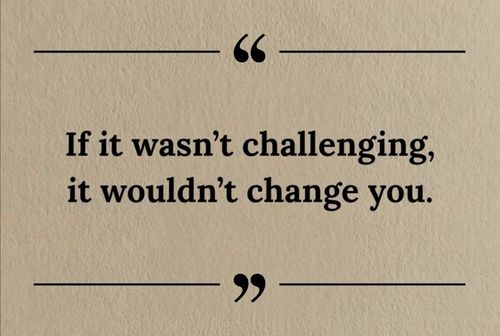
“If it wasn’t challenging, it wouldn’t change you.” It’s a phrase you’ve likely seen on Instagram or gym walls.
Transformative change often requires stepping outside your comfort zone. It can be daunting, but the rewards are significant. For instance, consider someone learning to play a musical instrument. Initially, it may be challenging, but with practice, they not only master the instrument but also gain confidence and a sense of achievement.
True transformation doesn’t happen when things are easy; it happens when you intentionally step into the friction. Here is how to turn that friction into fuel.
Engaging in challenging tasks can be likened to exercising a muscle. The more you push your brain, the stronger its neural pathways become. For example, when you tackle a new language, your brain forms new connections, making it easier to learn complex concepts as you progress. This process is essential for developing resilience and adaptability.
-
- The Shift: Stop viewing struggle as a sign of failure. View it as the “resistance weight” for your brain. Just as a muscle needs micro-tears to grow back stronger, your mindset needs “micro-failures” to expand.
- 2026 Trend: Focus on “Nervous System Balance.” Growth shouldn’t mean burnout. It means stressing the system, then intentionally recovering.
Emotional fitness is akin to mental agility. Just as athletes prepare their bodies for competition, individuals can cultivate their emotional muscles. Consider meditation as an example; it enhances emotional regulation and promotes a sense of calm even amidst chaos. This practice enables you to respond to stress proactively rather than reactively.
-
- Why it matters: In a world of high-functioning anxiety, the ability to remain “non-reactive” is a superpower.
- Action Step: Practice “Reflective Journaling”. Don’t just vent; analyze. Ask yourself: What specifically about this challenge triggered me? What is the data telling me vs. what is my fear telling me?
Building a support network is crucial in today’s fast-paced world. For instance, joining a community group focused on wellness can provide emotional support and shared experiences, which can greatly enhance your emotional fitness. Engaging in group activities fosters connections and creates a sense of belonging, which is essential for mental health.
-
- The Insight: We often fail at challenges because we try to hide them. Real resilience is built in community.
- Try This: Instead of suffering in silence, join a “micro-community” centered around a shared goal (e.g., a running club, a sober curiosity group, or a founders’ circle). Shared struggle creates deeper bonds than shared success ever will.
Setting learning goals shifts the focus from external validation to personal growth. For example, instead of fixating on achieving a specific sales target, a professional might aim to enhance their negotiation skills. This approach not only makes the journey more fulfilling but also fosters resilience as challenges become stepping stones rather than roadblocks.
-
- The Strategy: Switch to Learning Goals.
-
- Outcome Goal: “Get a promotion.”
- Learning Goal: “Learn how to lead a project with confidence and communicate clearly with stakeholders.”
-
- When your goal is to learn, a difficult day isn’t a setback—it’s a lesson. This simple shift makes you antifragile.
- The Strategy: Switch to Learning Goals.
Acknowledging that setbacks are part of the learning process is vital. For instance, an entrepreneur may face multiple rejections before securing funding for their startup. Each setback provides valuable insights and experiences that contribute to their overall emotional fitness, preparing them for future challenges.
Ready to challenge yourself? Get INSTANT ACCESS to The Daily Intentional Habits Bundle today at https://dailyintentional.com/daily-intentional-habits-bundle/
To further enhance your emotional fitness, consider incorporating daily mindfulness practices. These can include simple breathing exercises or guided meditations that ground you, allowing you to approach challenges with a clearer mind and a more resilient spirit. Remember, emotional fitness is not just a goal but a continuous journey of personal development.