
Creating meaningful relationships is a rewarding process that requires time, effort, and a genuine interest in others. Here are some tips to help you:
Be Authentic: Authenticity creates trust and builds a strong foundation for any relationship. Be true to yourself and your values.
Active Listening: Pay attention to what the other person is saying. Show empathy and understanding without rushing to respond.
Open Communication: Be open and honest with your feelings and thoughts. Encourage others to do the same.
Respect Boundaries: Understand and respect the other person’s personal boundaries. This shows that you value their comfort and individuality.
Show Appreciation: Regularly express your gratitude and appreciation. This can strengthen your bond and make the other person feel valued.
Spend Quality Time: Spend time together doing activities that you both enjoy. Shared experiences can create strong connections.
Be Supportive: Be there for them in times of need. Offering support in tough times shows that you care.
Patience: Building a meaningful relationship takes time. Be patient and allow the relationship to develop at its own pace.
Remember, every relationship is unique and what works for one might not work for another. It’s important to keep learning and growing together.
If you have not read The 5 Love Languages by Gary Chapman, I highly recommend you get your copy at https://amzn.to/4a9jUja and discover which one is your love language. This could be the thing you’re missing to understanding the secret to love that lasts.

Happiness is a state of mind that transcends external circumstances. It’s not about what happens to us, but how we perceive and respond to life’s events.
The ancient Stoic philosopher Marcus Aurelius understood this well. In his timeless work, Meditations, he wrote:
“The happiness of your life depends upon the quality of your thoughts: therefore, guard accordingly, and take care that you entertain no notions unsuitable to virtue and reasonable nature.”
Let’s explore how our thoughts shape our happiness and provide practical tips for cultivating a positive mindset.
The Stoic Wisdom of Marcus Aurelius
Marcus Aurelius, a Roman emperor from 161 to 180 AD, was not only a powerful ruler but also a devoted Stoic philosopher. His writings in Meditations reveal profound insights into human nature and the pursuit of inner peace. Here are some key takeaways:
Thoughts Create Reality: Aurelius believed that our thoughts shape our reality. If we harbor negative or irrational notions, our experiences will reflect that. Conversely, positive thoughts lead to a happier life.
Guard Your Mind: Just as we protect our physical health, we must safeguard our minds. Be mindful of the thoughts you entertain. Are they aligned with virtue and reason? If not, discard them.
Minimalism and Contentment: Aurelius emphasized that happiness requires very little. It’s not about external possessions but our internal state. He wrote, “Very little is needed to make a happy life; it is all within yourself, in your way of thinking.”
Reject Anger and Injury: Holding onto anger harms us more than the initial cause of anger. Let go of grudges and focus on healing. Aurelius advised, “Reject your sense of injury, and the injury itself disappears.”
Live in Harmony: When we align our thoughts with virtue, we live in harmony with ourselves and the universe. Inner peace arises from this alignment.
Practical Steps for Cultivating Positive Thoughts
Now that we’ve explored Marcus Aurelius’s wisdom, let’s apply it to our lives:
Mindfulness: Pay attention to your thoughts. When negativity arises, pause and question its validity. Replace it with a more constructive perspective.
Gratitude: Reflect on what you have rather than what you lack. Appreciate the small joys—a warm cup of tea, a kind word from a friend, or a beautiful sunset.
Choose Your Reactions: We can’t control external events, but we can choose our reactions. Respond with wisdom, compassion, and resilience.
Practice Stoicism: Read Aurelius’s Meditations or explore other Stoic teachings. They offer practical tools for maintaining equanimity.
Happiness isn’t a distant destination; it’s a journey guided by our thoughts. As Marcus Aurelius reminds us, “No man is happy who does not think himself so.” So, guard your mind, cultivate positivity, and embrace the power of thought to create a happier life.
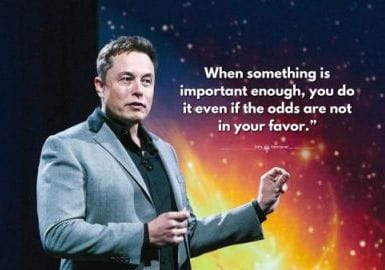
Elon Musk, the visionary entrepreneur, is undeniably shaping the future of possibilities. His ventures, such as SpaceX, Tesla, Neuralink, and The Boring Company, are pushing the boundaries of what is possible.
SpaceX
Musk founded SpaceX in 2002 with the goal of making space exploration more accessible. SpaceX has made significant advancements in reusable rocket technology and has successfully launched numerous missions to the International Space Station (ISS).
Tesla
Musk played a crucial role in the success of Tesla, an electric vehicle and clean energy company. Tesla’s innovative electric cars have revolutionized the automotive industry and popularized sustainable transportation.
Neuralink
In 2016, Musk founded Neuralink, a neurotechnology company focused on developing implantable brain-machine interface devices. The company aims to enhance human capabilities and potentially address neurological conditions.
The Boring Company
Musk proposed the concept of the Hyperloop, a high-speed transportation system, and later founded The Boring Company to develop tunneling technology. The company’s projects aim to alleviate traffic congestion and improve transportation efficiency.
Musk’s contributions as an entrepreneur have had a profound impact on various industries. His visionary thinking and commitment to innovation continue to shape the future of technology.
50 Powerful Quotes by Elon Musk
Here are 50 powerful quotes by Elon Musk that display his ideas on entrepreneurship, business management, technology, and innovation:
“When something is important enough, you do it even if the odds are not in your favor.”
“I think it is possible for ordinary people to choose to be extraordinary.”
“Pay attention to negative feedback, and solicit it, particularly from friends.”
“Persistence is very important. You should not give up unless you are forced to give up.”
“Failure is an option here. If things are not failing, you are not innovating enough.”
“It’s OK to have your eggs in one basket as long as you control what happens to that basket.”
“Some people don’t like change, but you need to embrace change if the alternative is disaster.”
“The first step is to establish that something is possible; then probability will occur.”
“If you get up in the morning and think the future is going to be better, it is a bright day. Otherwise, it’s not.”
“Being an entrepreneur is like eating glass and staring into the abyss of death.”
“I could either watch it happen or be a part of it.”
“If something’s important enough you should try. Even if the probable outcome is failure.”
“I think most people can learn a lot more than they think they can. They sell themselves short without trying.”
“There are really two types of people. People who are compelled to try to do it. And people who are not.”
“I take the position that I’m always to some degree wrong, and the aspiration is to be less wrong.”
“People should pursue what they’re passionate about. That will make them happier than pretty much anything else.”
“It is possible for ordinary people to choose to be extraordinary.”
“You have to be pretty driven to make it happen. Otherwise, you will just make yourself miserable.”
“I think it’s very important to have a feedback loop, where you’re constantly thinking about what you’ve done and how you could be doing it better.”
“Life is too short for long-term grudges.”
“I don’t create companies for the sake of creating companies, but to get things done.”
“My motivation for all my companies has been to be involved in something that I thought would have a significant impact on the world.”
“I would like to die on Mars. Just not on impact.”
“I think it is important to have a good framework for thinking. It’s like a mental toolbox.”
“Patience is a virtue, and I’m learning patience. It’s a tough lesson.”
“Brand is just a perception, and perception will match reality over time.”
“If you’re trying to create a company, it’s like baking a cake.”
“I think it’s very important to have a feedback loop, where you’re constantly thinking about what you’ve done and how you could be doing it better.”
“I wouldn’t say I have a lack of fear. In fact, I’d like my fear emotion to be less because it’s very distracting and fries my nervous system.”
“I don’t spend my time pontificating about high-concept things; I spend my time solving engineering and manufacturing problems.”
“I always invest my own money in the companies that I create. I don’t believe in the whole thing of just using other people’s money. I don’t think that’s right. I’m not going to ask other people to invest in something if I’m not prepared to do so myself.”
“I don’t believe in process. In fact, when I interview a potential employee and he or she says that ‘it’s all about the process,’ I see that as a bad sign.”
“The problem is that at a lot of big companies, process becomes a substitute for thinking. You’re encouraged to behave like a little gear in a complex machine. Frankly, it allows you to keep people who aren’t that smart, who aren’t that creative.”
“There’s a tremendous bias against taking risks. Everyone is trying to optimize their ass-covering.”
“Starting and growing a business is as much about the innovation, drive, and determination of the people behind it as the product they sell.”
“I think that’s the single best piece of advice: constantly think about how you could be doing things better and questioning yourself.”
“I wouldn’t say I have a lack of fear. In fact, I’d like my fear emotion to be less because it’s very distracting and fries my nervous system.”
“I think it’s very important to have a feedback loop, where you’re constantly thinking about what you’ve done and how you could be doing it better.”
“I don’t spend my time pontificating about high-concept things; I spend my time solving engineering and manufacturing problems.”
“I always invest my own money in the companies that I create. I don’t believe in the whole thing of just using other people’s money. I don’t think that’s right. I’m not going to ask other people to invest in something if I’m not prepared to do so myself.”
“I don’t believe in process. In fact, when I interview a potential employee and he or she says that ‘it’s all about the process,’ I see that as a bad sign.”
“The problem is that at a lot of big companies, process becomes a substitute for thinking. You’re encouraged to behave like a little gear in a complex machine. Frankly, it allows you to keep people who aren’t that smart, who aren’t that creative.”
“There’s a tremendous bias against taking risks. Everyone is trying to optimize their ass-covering.”
“Starting and growing a business is as much about the innovation, drive, and determination of the people behind it as the product they sell.”
“I think that’s the single best piece of advice: constantly think about how you could be doing things better and questioning yourself.”
“If you go back a few hundred years, what we take for granted today would seem like magic – being able to talk to people over long distances, to transmit images, flying, accessing vast amounts of data like an oracle. These are all things that would have been considered magic a few hundred years ago.”
“My biggest mistake is probably weighing too much on someone’s talent and not someone’s personality. I think it matters whether someone has a good heart.”
“I don’t create companies for the sake of creating companies, but to get things done.”
“I say something, and then it usually happens. Maybe not on schedule, but it usually happens.”
“I do think there is a lot of potential if you have a compelling product and people are willing to pay a premium for that. I think that is what Apple has shown. You can buy a much cheaper cell phone or laptop, but Apple’s product is so much better than the alternative, and people are willing to pay that premium.”
His powerful quotes reflect his mindset, providing a glimpse into the thought process of a man who refuses to accept the status quo and constantly strives for progress. As we move forward into an era of unprecedented technological advancement, Musk’s influence will undoubtedly continue to shape our future.
Remember, in Musk’s own words, “When something is important enough, you do it even if the odds are not in your favor.” So, let’s embrace the future of possibilities with open minds and hearts, ready to take on the challenges and opportunities that lie ahead.
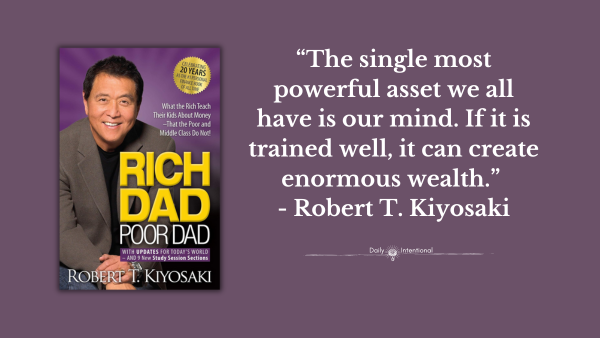
“The single most powerful asset we all have is our mind. If it is trained well, it can create enormous wealth.” – Robert T. Kiyosaki
“Rich Dad Poor Dad”, a book by Robert Kiyosaki, has been a game-changer for many when it comes to personal finance and investing. It provides valuable insights into financial education, wealth creation, and the difference between working for money and having your money work for you. Here are some key lessons from the book and actionable steps you can take to invest more intentionally.
Key Lessons
The Importance of Financial Literacy: Kiyosaki emphasizes that financial literacy is crucial. Understanding the difference between assets and liabilities, and the basics of income, expenses, and investing, is the foundation of financial success.
Mind Your Own Business: Kiyosaki advises readers to focus on building and owning income-producing assets. This could be real estate, businesses, stocks, bonds, or intellectual property.
Don’t Work for Money, Let Money Work for You: The rich don’t work for money; they make their money work for them. This involves investing in assets that generate passive income.
The Power of Investing: Investing allows you to grow your wealth exponentially over time. It’s about buying assets that will appreciate in value or provide a steady income.
Overcoming Fear and Greed: Many people are controlled by the fear of being poor and the greed to get rich quickly. Kiyosaki suggests overcoming these emotions and making rational financial decisions.
Actionable Steps
Invest in Financial Education: Before you start investing, educate yourself about personal finance and investing. Read books, attend seminars, or take online courses.
Start Acquiring Assets: Start small if you need to, but the key is to start. This could be investing in stocks, starting a side business, or buying rental property.
Manage Your Emotions: Don’t let fear or greed drive your financial decisions. Make rational decisions based on your financial knowledge and goals.
Keep It Simple: Don’t over-complicate your investments. Stick to what you understand and are comfortable with.
Focus on Opportunities: Instead of focusing on obstacles or risks, focus on opportunities. Look for ways to create more income or grow your wealth.
“Rich Dad Poor Dad” offers valuable lessons on financial education, investing, and wealth creation. By applying these lessons and taking intentional steps towards investing, you can create a financially secure future.
Remember, the journey to financial freedom is a marathon, not a sprint. It requires patience, discipline, and continuous learning. But with the right mindset and actions, you can make your money work for you and achieve your financial goals.
Get your copy of Rich Dad Poor Dad on Amazon at https://amzn.to/3We0l5T
“Gratitude turns what we have into enough.”
We live in a time where time often rushes past us, where notifications flood our screens and responsibilities pile up, there exists a simple yet profound practice that can ground us, shift our perspective, and infuse our lives with gratitude: gratitude journaling. It’s not merely about jotting down words; it’s about capturing moments, emotions, and blessings that weave the fabric of our existence.
What Is Gratitude Journaling?
Gratitude journaling involves intentionally recording things we are thankful for. It’s a mindful act of acknowledging the goodness in our lives, both big and small. Whether it’s the warmth of morning sunlight, a kind word from a friend, or a simple meal shared with loved ones, gratitude journaling invites us to pause and savor life’s gifts.
Why Practice Gratitude Journaling?
Shifts Our Focus:We are surrounded by constant distractions, gratitude journaling redirects our attention.
It nudges us away from what’s lacking toward what’s abundant.
Boosts Well-Being:Research shows that practicing gratitude improves mental health.
It reduces stress, enhances sleep quality, and fosters resilience.
Celebrates Small Victories:Gratitude journaling celebrates the everyday victories we often overlook.
From a cozy cup of tea to a heartfelt smile, each entry becomes a celebration.
How to Start Gratitude Journaling:
Choose Your Medium:Whether it’s a physical notebook, a digital app, or a dedicated section in your planner, find what resonates with you.
The act of writing by hand can deepen the experience.
Set a Regular Time:Make gratitude journaling a daily ritual.
Morning or evening—whichever suits your rhythm.
Be Specific:Instead of generic statements like “I’m grateful for my family,” delve deeper.
Describe a specific moment: “Today, my daughter’s laughter echoed through the house.”
Explore Different Prompts:
Use prompts to spark creativity:“Three things that brought me joy today…”
“A person who made a difference in my day…”
“An unexpected blessing…”
The Ripple Effect of Gratitude:
Self-Awareness:As you write, you become more attuned to your emotions.
You notice patterns, triggers, and sources of joy.
Kindness Amplified:Gratitude spills over into kindness.
When we appreciate life’s gifts, we’re more likely to extend kindness to others.
Resilience Cultivated:Grateful hearts bounce back from adversity.
They find strength even in challenging times.
The BLUF Planner: Your Companion in Gratitude:
Introducing the Bottom Line Up Front (BLUF) Planner by Terry Thompson. This powerful planning system narrows your focus to the one thing you must get done each day. Accompanied by sections for supporting tasks, mindset focus, opportunities, and reflection, the BLUF Planner ensures intentional living.
Why Combine Gratitude Journaling with the BLUF Planner?
- Efficiency: Start your day with gratitude. Write down what you’re thankful for, then dive into your BLUF task.
- Clarity: Gratitude sharpens your focus, making BLUF planning even more effective.
- Resilience: The BLUF Planner helps you tackle challenges, while gratitude fuels your resilience.
Get Started Today:
Tap or Click this link to Purchase the BLUF Planner
Set Aside Time: Morning or evening, open your planner.
Write Your BLUF Task: The most important thing for the day.
Gratitude Journal: Reflect on blessings, moments, and kindness.
Feel the Ripple: Watch gratitude transform your days.
