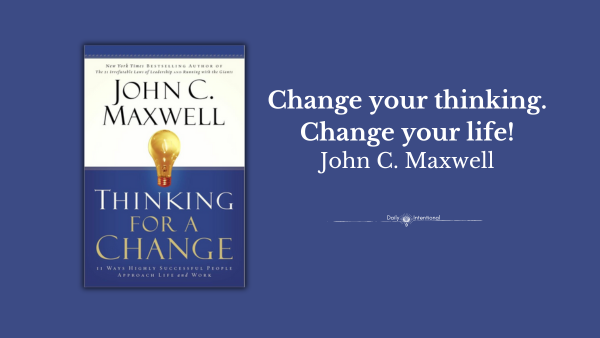
Change your thinking, change your life.” John C. Maxwell
This powerful quote by John C. Maxwell encapsulates the essence of his transformative book, “Thinking For A Change”. In this article, we delve into the key takeaways from this enlightening read.
The Power of Intentional Thinking
John C. Maxwell emphasizes the importance of intentional thinking. He explains that our thoughts shape our actions and ultimately determine our success or failure1. By being intentional about our thoughts, we can align them with our goals and aspirations, leading to more positive outcomes.
Key Takeaways:
- Big-Picture Thinking: This involves seeing the world beyond your own needs which leads to great ideas2. It encourages continuous growth and expansion.
- Focused Thinking: This concept is based on aiming your attention at a specific point2. It enforces a transparent and robust approach to decision-making.
- Creative Thinking: Creativity is not an innate characteristic, it can be developed over the years. We lose our creativeness in the adult world, but that doesn’t mean it cannot be reignited.
- Realistic Thinking: Being a down-to-earth person means to advocate for facing the actual reality.
- Strategic Thinking: This involves analyzing the pros and cons of every decision. Such analytical approach focuses on planning before the implementation phase is underway.
- Possibility Thinking: In this case, the belief plays a pivotal role in reaching the outlined goals. The motto is “Visualize before you can materialize.”
- Reflective Thinking: Reflective thinking reduces the stigma attached to the future and concentrates on the past. Looking back and seeing your mistakes is one way to improve your current status.
- Going Beyond Popular Thinking: If you want to distinguish yourself from your peers and the rest of the flock, one must utilize the “power of the unpredictable” and apply an out-of-box mindset.
John C. Maxwell’s “Thinking For A Change” is a comprehensive guide to improving thinking abilities. It offers practical strategies, exercises, and insights to help readers develop a more intentional and effective thinking process.
Purchase access to this amazing book on Amazon at https://amzn.to/3Uezt2Z
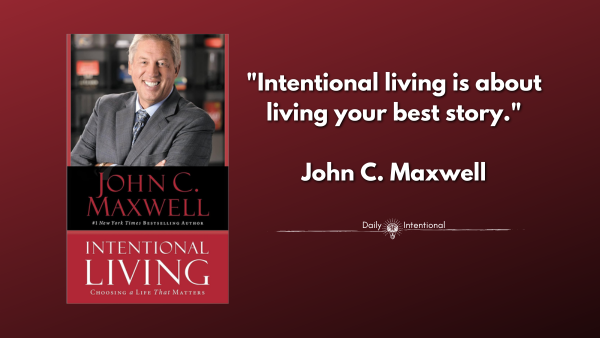
John C. Maxwell, a renowned author and leadership mentor, underscores the significance of leading a life with purpose. He suggests that many individuals journey through life without a clear sense of direction or purpose, which prevents them from realizing their full potential.
Maxwell encourages us to consciously design our lives rather than letting them unfold by chance. He posits that the measure of success is not personal achievement, but the value we add to the lives of others.
Maxwell presents the concept of intentional living as the pathway to a meaningful life. He asserts that good intentions alone are insufficient; it’s living intentionally that prompts us to question, prioritize, and focus on what truly matters to us.
He contrasts an unintentional life, which passively accepts everything, with an intentional life, which selectively embraces only those things that contribute to a mission of significance.
Here are some paraphrased quotes from the book:
“No one achieves a successful end without deliberate action.”
“An unintentional life passively accepts everything and does nothing. An intentional life selectively embraces only those things that contribute to a mission of significance.”
“A dream necessitates a partner: commitment.”
“Dreams often come one size too big so that we can grow into them.”
“If I wanted to make a difference… Merely wishing for change won’t bring it about. Hoping for improvements won’t manifest them. Dreaming won’t provide all the answers I need. Vision alone won’t bring about transformation in me or others.”
“Action is the catalyst that transforms human dreams into significance.”
“There isn’t anyone you couldn’t learn to love once you’ve heard their story.”
“When you live each day with intentionality, there’s almost no limit to what you can do. You can transform yourself, your family, your community, and your nation.”
“Intentional living is about living your best story.”
“Most people want to hear or tell a good story. But they don’t realize they can and should be the good story. That requires intentional living.”
Purchase your copy of Intentional Living: Choosing a Life That Matters by John C. Maxwell today at https://amzn.to/3UO8qgs
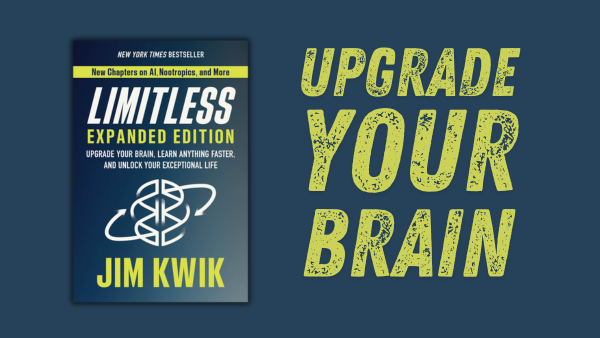
“Identify and challenge the assumptions, habits, and procrastinations that limit you and expand the boundaries of what you believe is possible.”
Limitless Expanded Edition: Upgrade Your Brain, Learn Anything Faster, and Unlock Your Exceptional Life by Jim Kwik is a comprehensive guide to unlocking the full potential of your brain. It provides practical techniques to help you level-up your mental performance and transform your life.
The book is divided into three main sections, each focusing on a different aspect of brain enhancement:
Flip Your Mindset: This section encourages you to identify and challenge the assumptions, habits, and procrastinations that limit you and expand the boundaries of what you believe is possible.
Ignite Your Motivation: Here, Kwik emphasizes the importance of uncovering your passions, purposes, and sources of energy. He believes that understanding what motivates you is the key to unlocking limitless mental capacity.
Master the Methods: This part of the book is dedicated to accelerating learning, improving memory, and enhancing brain performance. Kwik applies the latest neuroscience for accelerated learning so you can finish a book 3x faster through speed reading (and remember it), learn a new language in record time, and master new skills with ease.
Harness A.I. to Boost H.I.: Kwik suggests that we can use Artificial Intelligence (A.I.) to enhance our Human Intelligence (H.I.). This could involve using technology to organize our tasks, learn new skills, or even improve our memory.
Discover Your Brain Type: Understanding how your brain works can help you tailor your learning methods to suit your unique cognitive style. Kwik provides a self-assessment tool to help you discover your “brain animal” code, which can guide you in optimizing your learning and memory techniques.
The book also introduces the concept of building momentum. According to Kwik, unstoppable momentum is the product of mindset, motivation, and methods.
Grab your copy of Limitless Expanded Edition: Upgrade Your Brain, Learn Anything Faster, and Unlock Your Exceptional Life by Jim Kwik today at https://amzn.to/3UK4FYc

Reading is more than just a hobby; it’s a powerful tool that can transform your life. Here are ten reasons why you should make reading a regular part of your routine:
Exercise for the Mind: Just like physical exercise strengthens the body, reading strengthens the mind. It stimulates mental processes, enhances cognitive function, and improves focus and attention span. It’s like a gym workout for your brain!
Enhancing Vocabulary: Reading is a fantastic way to expand your vocabulary. It introduces you to a wide range of words and phrases, helping you express yourself more effectively and confidently.
Relief from Stress: Reading is a form of escapism that can help reduce stress. By immersing yourself in a different world, you can momentarily forget about your worries and tensions, promoting relaxation and peace of mind.
Boosting Mood: Reading has the power to influence your mood positively. It can provide comfort during tough times, bring joy, and even help combat symptoms of depression, making you feel happier and more content.
Improving Memory: Reading requires you to remember various details, such as characters, plots, and themes. This mental exercise can enhance your memory and concentration, keeping your mind sharp and agile.
Refining Writing Skills: Reading exposes you to different writing styles and techniques, which can significantly improve your writing skills. It can inspire you to experiment with your writing and express your thoughts more eloquently.
Fostering Empathy: Reading literary fiction can help you understand and relate to the emotions and experiences of others, fostering empathy and improving your social interactions.
Promoting Longevity: Engaging your mind in activities like reading can contribute to a longer, healthier life. It keeps your brain active and engaged, which can potentially increase your lifespan.
Sparking Creativity (additional benefit): Reading fuels your imagination, leading to increased creativity. It encourages you to visualize different scenarios and think outside the box, which can enhance your problem-solving skills and creative thinking.
Expanding Knowledge (additional benefit): Reading is a gateway to knowledge. It offers insights into a wide range of topics, from science and history to culture and philosophy, making you a more informed and well-rounded individual.
Grab a book and experience these incredible benefits right now!
Music has been a cornerstone of human culture for thousands of years, serving as a means of expression, communication, and healing.
Recent research has revealed that certain frequencies in music can have a significant impact on our mood and even possess healing properties.
Let’s explore the science behind these frequencies and their effects on our well-being.
Understanding Sound Frequencies
Sound is essentially vibrations that travel through the air, and these vibrations have a distinct frequency. Frequency refers to the number of cycles or vibrations per unit of time and is measured in Hertz (Hz). Different musical notes are produced by sound waves vibrating at specific frequencies.
The Impact of Frequencies on Mood
Our brain is akin to a symphony conductor, orchestrating various responses to the sounds we hear. When we listen to music, our brain processes the different frequencies present in the melodies and rhythms. Research has shown that specific frequencies can directly impact our brainwaves. For example, higher frequencies, like those found in upbeat tunes, can stimulate the brain, triggering the release of neurotransmitters like dopamine, which are associated with feelings of joy and pleasure. Conversely, lower frequencies, such as the soothing hum of a cello, can induce a state of relaxation by encouraging the brain to produce alpha and theta brainwaves, which are linked to calmness and meditation.
Healing Frequencies and Their Effects
The concept of healing frequencies is based on the idea that all matter, including the human body, vibrates at specific frequencies. Within the realm of sound therapy and alternative health, the Solfeggio frequencies are believed to have profound physiological and psychological effects. Each of these frequencies is associated with specific properties and is thought to be able to impact the body and mind in various beneficial ways. Here are some of the key Solfeggio frequencies and their effects:
- 396 Hz – Liberating Frequency | Root Chakra: This frequency is associated with the Root Chakra, aiming to liberate and release negative energy. It promotes a sense of grounding, security, and stability.
- 417 Hz – Resonating Frequency | Sacral Chakra: Aligned with the Sacral Chakra, 417 Hz is believed to resonate with emotions, creativity, and passion. It helps in breaking negative patterns and facilitating positive change.
- 528 Hz – Love Frequency | Solar Plexus Chakra: Known as the Love Frequency, 528 Hz is linked to the Solar Plexus Chakra. It is believed to promote healing and transformation, fostering love and compassion.
- 639 Hz – Connecting Frequency | Heart Chakra: Associated with the Heart Chakra, 639 Hz is considered a connecting frequency. It aims to enhance communication, understanding, and harmony in relationships.
- 741 Hz – Awakening Frequency | Throat Chakra: Tied to the Throat Chakra, 741 Hz is believed to be an awakening frequency. It focuses on self-expression, clarity, and communication.
- 852 Hz – Intuition Frequency | Third Eye Chakra: Linked with the Third Eye Chakra, 852 Hz is associated with intuition and spiritual insight.
The power of music and its frequencies is truly fascinating. Whether it’s lifting our spirits, calming our minds, or promoting healing, music has a profound impact on our lives.
So the next time you listen to your favorite song, remember that you’re not just hearing beautiful melodies – you’re also experiencing the incredible healing power of music frequencies.
