
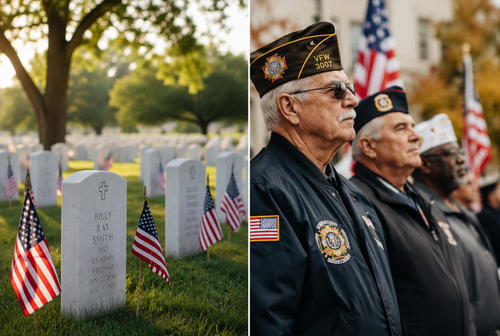
These two holidays are often mentioned in the same breath, but they are not the same thing.
Memorial Day is meant to honor U.S. service members who died while serving their country. Veterans Day honors all who served in the U.S. military, whether they served in wartime or peacetime, and whether they are living or deceased. The National Cemetery Administration describes Memorial Day as the nation’s foremost annual day to mourn and honor deceased service members, while official explanations of Veterans Day consistently define it as a day to honor all veterans.
What Memorial Day Means
Memorial Day is a day of remembrance for the fallen.
It is specifically about those who died in military service. That is the core meaning people often miss when the holiday gets blurred into a general celebration of military service or the unofficial start of summer. Official federal and veterans-affairs sources emphasize that Memorial Day is centered on mourning, remembrance, and honoring the dead.
The holiday began after the Civil War and was originally known as Decoration Day. Over time, it expanded into a national observance honoring all American military personnel who died in service. The National Cemetery Administration traces that history directly to post-Civil War memorial practices and the formal order issued in the late nineteenth century.
That is why Memorial Day carries a more solemn emotional tone. It is tied to sacrifice, grief, memory, and national loss. Traditions such as visiting cemeteries, placing flags on graves, attending memorial ceremonies, and observing the National Moment of Remembrance reflect that deeper purpose.
What Veterans Day Means
Veterans Day is broader.
It honors everyone who served in the U.S. Armed Forces, not only those who died in service. That includes living veterans, which is one of the clearest distinctions between the two holidays. AP’s explainer on Veterans Day and other official summaries both make that difference explicit.
Veterans Day also has a different historical origin. It began as Armistice Day, marking the end of World War I on November 11, and later evolved into a holiday honoring veterans of all wars. That history is part of why the date remains fixed to November 11 rather than moving to a Monday-style observance.
Because Veterans Day is about service more broadly, its tone is often more celebratory and appreciative. Parades, ceremonies, school programs, public tributes, and veteran recognition events fit naturally with the purpose of the day. It is a time to thank veterans for their service, not a day focused primarily on mourning.
The Simplest Way to Remember the Difference
If you want the fastest way to keep them straight, think of it this way:
Memorial Day is for those who died in service. Veterans Day is for all who served. That single distinction is the one official sources return to again and again, and it clears up most of the confusion immediately.
Another helpful way to remember it is by the emotional posture of the day. Memorial Day asks for remembrance. Veterans Day asks for recognition and gratitude. One is rooted more in loss. The other is rooted more in appreciation.
Why People Mix Them Up
The confusion happens for understandable reasons.
Both holidays are patriotic. Both involve the military. Both can include flags, ceremonies, and public observances. And both are tied to service and sacrifice. But similarity in imagery is not the same as similarity in meaning. Current official and explanatory sources repeatedly note that people often confuse the two holidays, especially when Memorial Day is treated mostly as a long weekend.
That is also why language matters. Saying “Happy Memorial Day” can feel off to many people because the day is rooted in mourning the fallen, while “thank you for your service” fits more naturally with Veterans Day. Memorial Day is generally treated more as a day to remember than a day to congratulate.
Why the Difference Still Matters
The distinction matters because each holiday protects a different part of national memory.
If Memorial Day becomes a catch-all holiday for all military service, its focus on the fallen gets diluted. If Veterans Day is treated only as another patriotic date on the calendar, the living legacy of military service gets flattened too. Keeping the difference clear helps preserve the purpose of both.
Memorial Day and Veterans Day both deserve respect, but they ask for different kinds of respect. One asks the country to remember those who never came home. The other asks the country to recognize those who did serve. Once that difference clicks, the meaning of both holidays becomes much clearer.